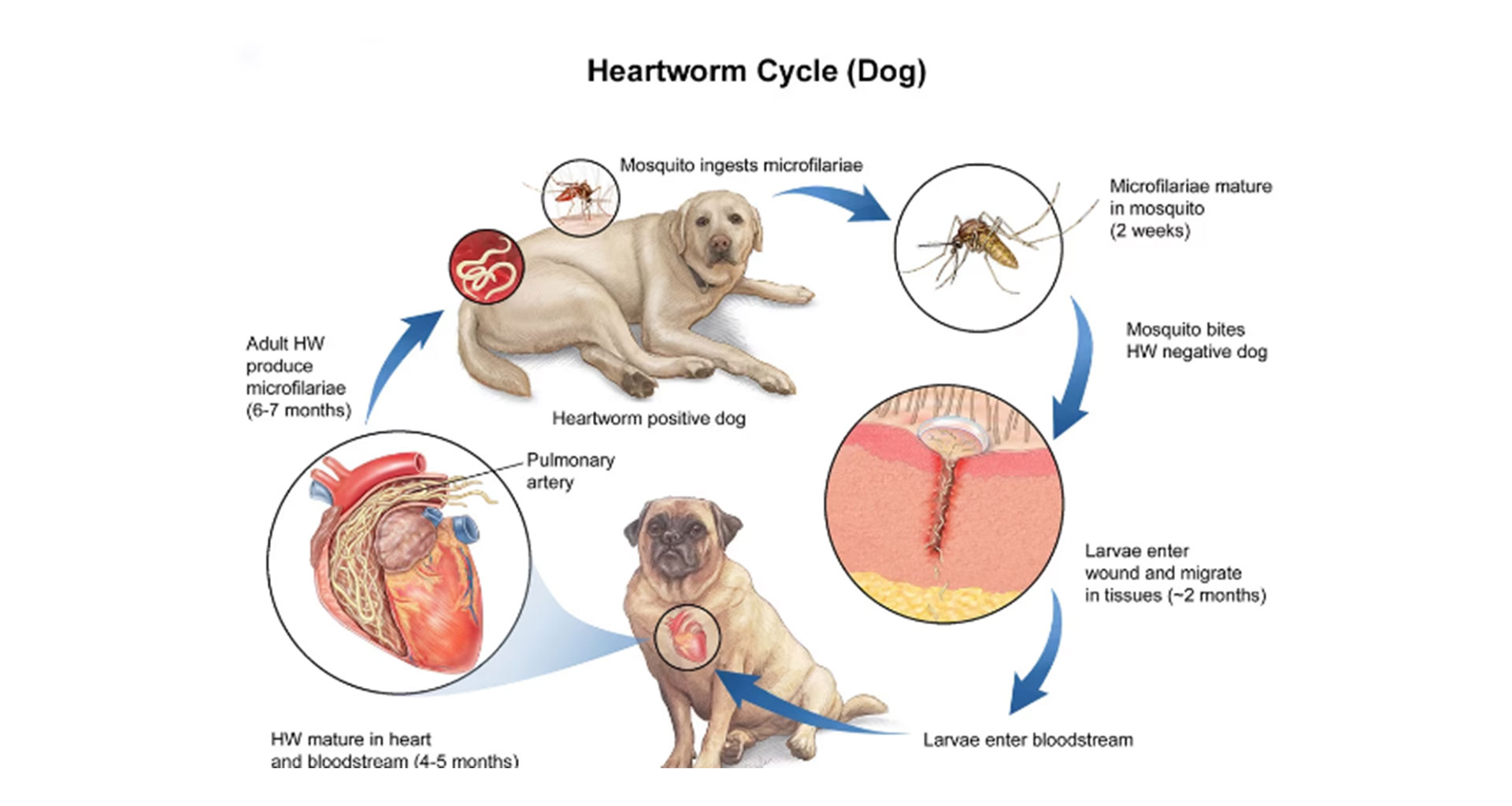
Three patients have been diagnosed with heartworm disease at the clinic since the beginning of the year. Heartworm disease is a serious, often fatal condition caused by the parasite Dirofilaria immitis. The infection is transmitted by mosquitoes. The mosquito acts as a vector after sucking blood from an infected dog and then transmits the parasite to another, uninfected dog. These worms live in the heart, lungs, and blood vessels, causing severe lung disease, heart failure, and damage to other organs.
Prior to the turn of the century, there were no reliable preventatives available and thus the disease was widespread throughout Australia. With the
21st century came more safe and reliable preventatives, with many options now available on the market. This saw a sharp decline in heartworm cases and the disease became increasingly isolated to dogs in the tropical north, or dogs who travelled to this area. However, over the past decade, an uptick in cases has
been observed as dog owners became complacent with prevention. Between 2017 and 2021, approximately 3500 cases were reported nationwide, with 221 cases in NSW. Since then, over 2500 more cases have been reported nationwide.
All three cases diagnosed in Nowra dogs have been locally acquired cases. There was no history of travel, and thus transmission occurred from infected dogs in the local area. This means that the local mosquito population is infected with the parasite, and dogs not on prevention are at risk of contracting the disease. It is also likely that there are many other cases of heartworm disease in dogs in the Shoalhaven which are yet to be detected. Two dogs are currently undergoing treatment, but unfortunately the third dog was experiencing advanced symptoms and was euthanised.
It is important to understand that being on prevention does not equal treatment. Prevention is exactly as it means – it only prevents a dog from contracting the disease if given regularly, without missing doses, but if a dog contracts the infection and then a preventative is given, it will not kill the established infection.
The third dog which was diagnosed serves as a good example. The dog had been on monthly prevention for three years and still had an infection which resulted in severe health consequences.
All dogs who are not on prevention, or who have missed doses of prevention for more than one month, should be tested for the disease. This test is a simple, five-minute blood test and could be live-saving for your dog. Prevention should not be given until after a negative test result has been received, as severe reactions and even death can occur with certain preventatives if given to a dog already infected with heartworm disease. Annual injections given by your veterinarian are the most reliable form of prevention, and this is encouraged as the preferred product for prevention of heartworm disease. Monthly
preventatives are also safe and effective, but must be given monthly throughout your dog’s life, without missing doses, to be effective.